Emergency Roof Leak Repair Chicago IL — 24/7 Water Ingress Containment
Immediate on-call contractor dispatch for active ceiling drips, commercial flat roof ponding breaches, and historic 2-flat masonry parapet leaks across Chicagoland.
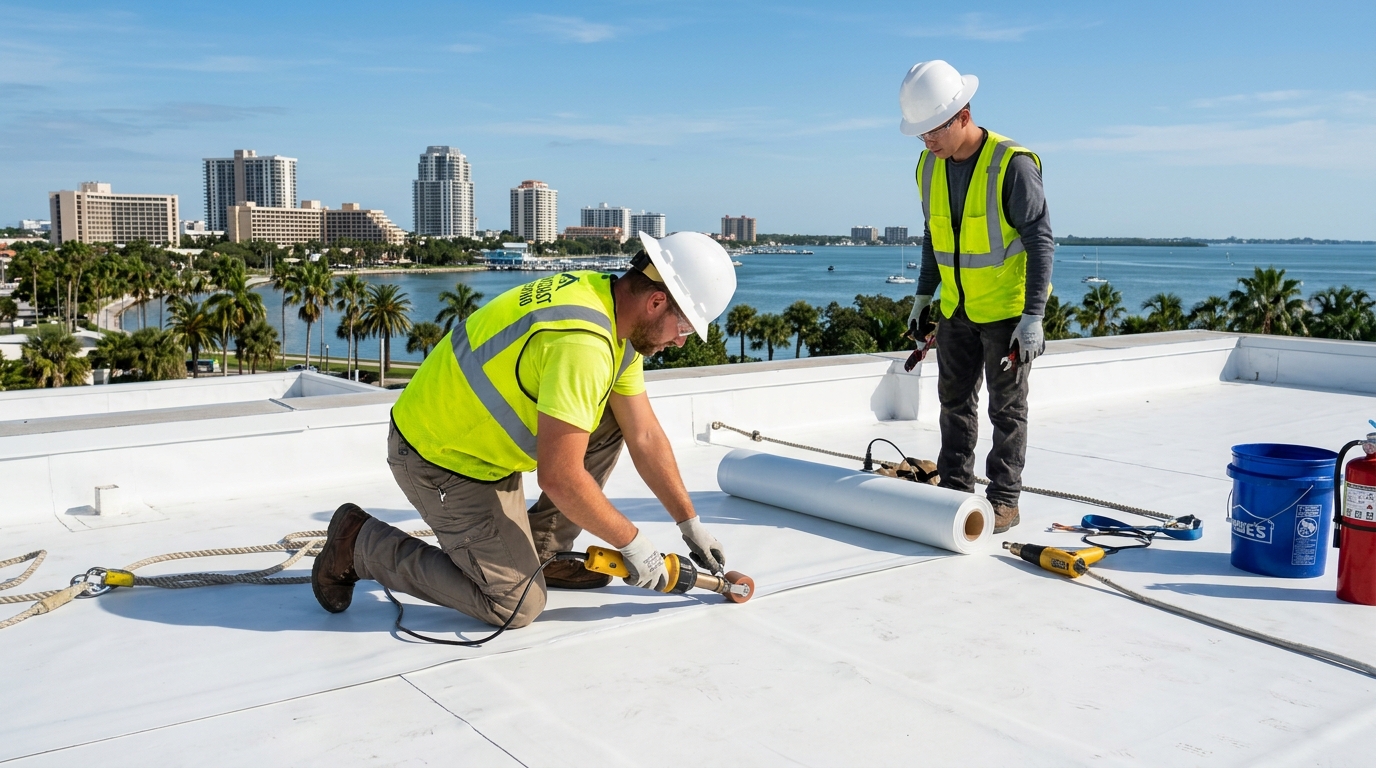
When violent Lake Michigan squalls, heavy sub-zero polar vortex freeze-thaw cycles, or intense convective cloudbursts strike Cook County, active roof leaks inflict immediate structural damage to interior plaster, blown cellulose insulation, and electrical systems. RoofExpertUSA operates Chicago's dedicated 24/7 emergency dispatch intake network, immediately mobilizing independent, licensed State of Illinois roofing contractors across Chicago neighborhoods, Evanston, Oak Park, and Cook County communities. Dispatched specialists arrive fully equipped for rapid leak containment, non-destructive FLIR moisture tracing, and durable weather-tight repairs.
Engineering Specialty: Active Low-Slope Flat Roof & Masonry Water Ingress Containment
Flat roof assemblies across Chicago's historic 2-flats, greystones, and commercial industrial centers present complex diagnostic challenges during an active storm. Unlike steep-pitch roofs where water flows directly down shingles by gravity, low-slope roofs rely on continuous monolithic membranes such as SBS modified bitumen, multi-ply built-up asphalt (BUR), or single-ply TPO/EPDM sheets. When a seam splits under severe thermal contraction (-20°F cold snaps) or is punctured by windblown debris, water pools on the surface and seeps into the underlying polyisocyanurate (polyiso) insulation.
Trapped water migrates horizontally across insulation board joints for dozens of feet before finding a structural decking breach or party wall top plate, eventually manifesting as a stained or bulging drywall ceiling far from the exterior entry point. Dispatched emergency technicians never rely on visual guesswork. Crews deploy high-resolution FLIR infrared thermography and capacitance impedance moisture meters to pinpoint the exact subsurface water ingress vector, followed by the immediate installation of industrial catchment funnels, ceiling puncture relief, and cold-weather elastomeric membrane patches.
Emergency Roof Leak Containment Field Protocols
Controlled Ceiling Relief
Technicians perform precision drainage puncture at the lowest deflection point of sagging drywall or blistered latex paint, directing water into containment funnels to prevent sudden ceiling collapse.
FLIR Sub-Membrane Moisture Tracing
Infrared thermal cameras detect microscopic temperature differentials between dry polyiso boards and waterlogged core substrate, isolating membrane puncture boundaries without tearing off intact roof sections.
Sub-Zero Emergency Sealants
During winter polar freezes, contractors deploy specialized low-temperature polyurethane elastomeric adhesives and heated torch-applied SBS cap strips that bond aggressively to wet surfaces below 32°F.
Parapet Masonry Reglet Seals
When leaks stem from deteriorated mortar along Chicago brick parapet walls, crews install emergency counter-flashing reglet wedges and high-modulus polyurethane joint sealants to stop wall water logging.
What to Do Inside Your Chicago Property While Awaiting Dispatch
While on-call emergency contractors are en route to your property, executing rapid interior triage protects electrical fixtures, structural hardwood, and commercial inventory:
- Deploy Wide Catchment Vessels: Place wide plastic storage containers or buckets directly beneath the leak. Place an old towel inside the vessel to muffle splashing sounds and stop water bouncing onto adjacent wood floors.
- Relieve Ceiling Water Pockets: If a ceiling drywall section is sagging or latex paint is stretching like a water balloon, position a bucket beneath it and gently pierce the center with a screwdriver or nail to drain the reservoir before the weight tears the ceiling down.
- Clear Electrical Hazards: If water is dripping near light fixtures, ceiling fans, or electrical outlets, shut off the corresponding branch breakers at your main electrical service panel immediately.
- Document Water Damage for Insurance: Take clear, timestamped photos and videos of the ceiling drips, wet walls, water pools, and damaged personal property prior to moving items or beginning cleanup.
Frequently Asked Questions
How fast can emergency roofing technicians reach my Chicago property? +
On-call crews are dispatched immediately upon your call, targeting arrival within 45 to 90 minutes throughout Chicago city neighborhoods, Evanston, Oak Park, Cicero, and surrounding Cook County communities.
Can you stop a flat roof leak in Chicago while it is actively raining or snowing? +
Yes. Emergency crews utilize specialized wet-surface elastomeric compounds, hot-air welded TPO patches, and industrial water diverters engineered to achieve immediate waterproof bonding in active wet and sub-freezing conditions.
Are dispatched Chicago roofing contractors properly licensed? +
Yes. Every contractor in our referral network holds an active State of Illinois Roofing Contractor License (IDFPR), carries at least in General Liability, maintains statutory Workers' Compensation, and complies with Chicago Building Code Title 14R.