Flat Roof Ponding Repair Chicago IL — Low-Slope Membrane & Drainage Restoration
Engineered standing water remediation, robotic hot-air TPO seam fusion, SBS modified bitumen patching, and tapered polyiso cricket drainage across Chicagoland.
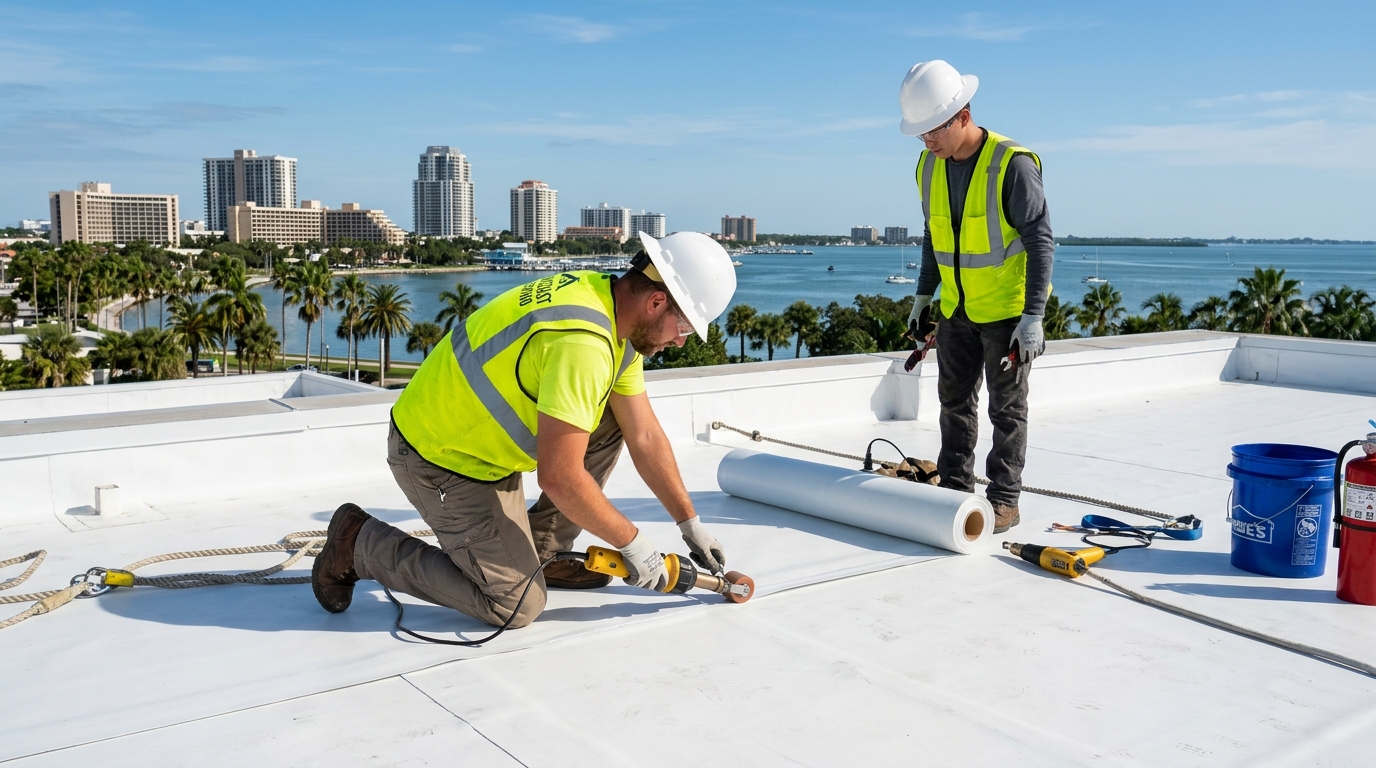
Low-slope flat roofs represent the dominant architectural roofing system across the City of Chicago, covering industrial warehouses, commercial strip centers, multi-unit greystones, and classic brick 2-flats. However, poor initial slope engineering, structural timber joist deflection, and clogged scuppers cause chronic standing water accumulations (ponding) that severely compromise roof longevity. RoofExpertUSA dispatches commercial-grade flat roof diagnostic and restoration contractors across Cook, DuPage, and Lake Counties.
Engineering Specialty: Commercial Low-Slope TPO Seam Welding & Modified Bitumen Torch Restorations
Under NRCA commercial guidelines and Chicago Building Code Title 14R standards, standing water that fails to drain completely within 48 hours following precipitation constitutes a non-compliant ponding hazard. Standing water imposes massive dead-load stresses on roof framing—each inch of standing water across a 1,000-square-foot roof plane adds approximately 5,200 pounds of static weight. Over decades, this excessive weight causes structural roof joists to bow downward, deepening the low spot in a compounding cycle of structural depression.
Furthermore, ponding water acts as a magnifying lens for solar UV radiation in summer, breaking down asphalt oils in modified bitumen cap sheets and leeching chemical plasticizers from single-ply TPO/PVC sheets. In winter, ponding water freezes into thick ice sheets that expand against parapet wall reglets and tear open membrane seams. Dispatched commercial specialists employ dual restoration methodologies: (1) Surgical heat-fused robotic hot-air welding for TPO/PVC single-ply systems using high-frequency robotic welders producing monolithic 1,000°F seam fusion; and (2) Dual-ply SBS/APP granule-surfaced modified bitumen torch patching for traditional multi-ply asphalt systems.
Chicagoland Flat Roof Drainage & Ponding Remediation Protocols
Tapered Polyiso Insulation Crickets
Technicians install sloped polyisocyanurate cricket saddles in low-lying decking areas to engineer positive 1/4-inch per foot slope, shedding standing water directly toward roof drains and scuppers.
Internal Roof Drain Sump Elevation
Where internal cast-iron roof drains sit higher than surrounding decking, crews install recessed drain sump pans and clean out subterranean conductor piping to eliminate perimeter ponding rings.
Parapet Masonry Scupper Box Enlargement
On Chicago brick buildings draining through parapet walls, technicians enlarge narrow scupper cutouts and line them with welded 24-gauge stainless steel to prevent debris blockages.
FLIR Sub-Surface Moisture Core Testing
Inspectors utilize infrared thermal scanning and core sampling to verify whether underlying polyiso insulation is dry before overlaying patches, preventing moisture trapping inside the deck.
Commercial Flat Roof Restoration vs. Complete Tear-Off Economics
A complete commercial roof tear-off and replacement in Chicago costs tens of thousands of dollars, requires extensive building permits under Title 14R, and creates major operational disruptions for business tenants. In many cases, if FLIR thermography confirms that moisture saturation is limited to less than 20 percent of the total roof plane, professional restoration is the smarter economic path. Dispatched contractors excise saturated insulation, install new closed-cell polyiso fill, apply robotic welded TPO or SBS modified bitumen patches, and apply high-solids silicone elastomeric roof coatings to extend roof life by 10 to 15 years at a fraction of replacement cost.
Frequently Asked Questions
What causes ponding water on Chicago flat roofs? +
Ponding water is caused by inadequate initial roof slope (less than 1/4 inch per foot), sagging timber roof joists under historic brick buildings, clogged internal cast-iron drains, undersized parapet scuppers, or improper HVAC curb installations.
Can you fix ponding water without tearing off the entire flat roof? +
Yes. Contractors install tapered polyisocyanurate insulation crickets, lower interior drain sump bowls, or enlarge parapet scupper openings to create positive drainage slope without requiring complete roof deck tear-off.
Is modified bitumen or TPO better for Chicago flat roofs? +
Both are excellent when properly installed. Robotic hot-air welded TPO offers superior solar heat reflectivity and chemical grease resistance, while multi-ply SBS modified bitumen provides exceptional puncture resistance and multi-layer redundancy against severe Chicago freeze-thaw cycles.