Chicagoland Emergency Roofing Dispatch — Service Areas Directory

Comprehensive emergency storm damage triage, low-slope flat roof repairs, and licensed roofing contractor routing across Cook, DuPage, and Lake Counties.
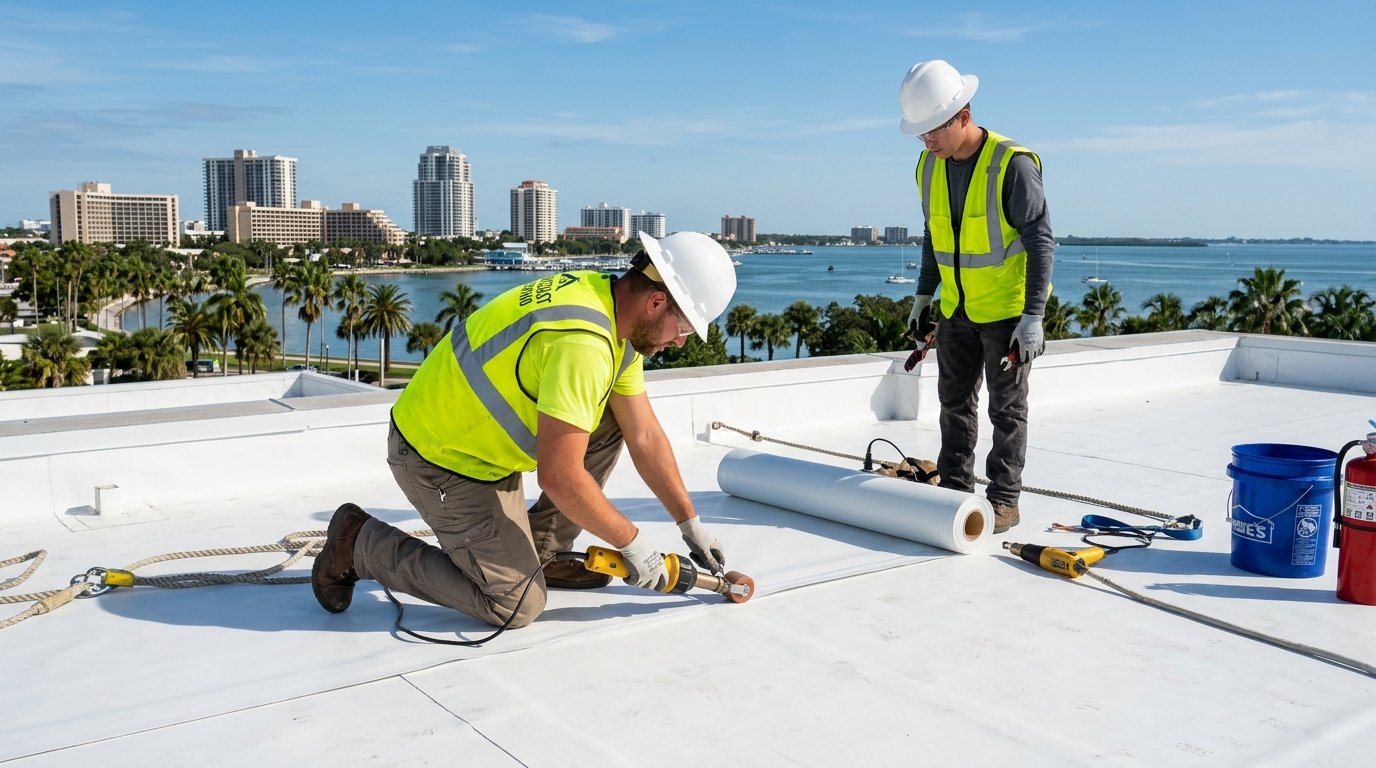
RoofExpertUSA operates a dedicated 24/7 emergency storm triage and independent roofing contractor dispatch network across the entire Chicago metropolitan region, including Cook County, DuPage County, Lake County, and adjacent northern Illinois communities. Whether your commercial flat roof in Schaumburg has suffered severe membrane ponding, your historic multi-family greystone in Evanston has wind-torn shingles from Lake Michigan gales, or severe convective hail shattered roof vents in Naperville and Arlington Heights, our dispatch coordinators connect you with vetted, licensed local roofing specialists ready for immediate emergency stabilization.

Chicagoland Regional Dispatch Coverage Architecture

The Chicago metropolitan area encompasses dense urban neighborhoods, expansive industrial logistics corridors, and sprawling suburban master-planned developments. From the Lake Michigan shoreline inland across the Des Plaines and Fox River valleys, roofing assemblies must withstand sudden pressure fronts, -20°F Arctic polar vortex freezes, and violent summer squall lines. Dispatched contractors maintain fully stocked service trucks positioned along primary transit arteries—including the Kennedy (I-90), Edens (I-94), Eisenhower (I-290), Stevenson (I-55), and Tri-State Tollway (I-294)—ensuring rapid emergency deployment across all quadrants of the metropolitan area.

Featured Regional Suburb Service Centers

DuPage County Hub

Naperville Roof Repair

High-end residential subdivisions, architectural shingle blowouts, flat roof sunroom addition repairs, and emergency storm triage along the I-88 western corridor.

Naperville Dispatch Details →
Northwest Commercial Hub

Schaumburg Storm Damage

Commercial retail plazas, industrial low-slope facilities, and suburban residences. Rapid dispatch for TPO membrane punctures, wind damage, and active leak containment.

Schaumburg Dispatch Details →
Lakefront Shoreline Hub

Evanston Roof Tarping

Severe Lake Michigan gale wind exposure, historic brick multi-family walk-ups, heavy-duty 10-mil poly timber-batten tarping, and emergency rafter anchors.

Evanston Dispatch Details →
Upper Cook County Hub

Arlington Heights Roof Leak

Established residential neighborhoods, winter ice dam ceiling drips, cracked plumbing pipe boots, and chimney step flashing repairs near the Route 53 corridor.

Arlington Heights Dispatch Details →

Emergency Coverage Across All Cook, DuPage & Lake County Communities

In addition to our dedicated suburban hubs, RoofExpertUSA dispatches independent licensed roofing contractors across all municipal jurisdictions within the Chicagoland footprint:

  • City of Chicago: Loop, West Loop, Lincoln Park, Lakeview, Logan Square, Bridgeport, Pilsen, Hyde Park, Beverly, Norwood Park.
  • North Shore & Lake County: Evanston, Skokie, Wilmette, Glenview, Highland Park, Lake Forest, Waukegan.
  • Northwest Suburbs: Schaumburg, Arlington Heights, Palatine, Des Plaines, Mount Prospect, Elk Grove Village, Hoffman Estates.
  • West & DuPage County: Naperville, Oak Park, Cicero, Berwyn, Elmhurst, Downers Grove, Wheaton, Lombard.
  • South & Southwest Suburbs: Orland Park, Tinley Park, Oak Lawn, Palos Heights, Oak Forest, Bolingbrook.

Frequently Asked Questions

How quickly can emergency roofing contractors arrive in suburban Chicago areas? +

On-call contractors maintain prepositioned service vehicles across major expressways (I-90, I-94, I-294, I-88), targeting arrival within 45 to 90 minutes across Cook, DuPage, and Lake County suburbs.

Do dispatched contractors service both residential homes and commercial flat roofs in the suburbs? +

Yes. Dispatched partner contractors hold State of Illinois Unlimited Roofing Contractor Licenses, permitting both steep-slope residential and low-slope commercial roofing operations.

Are building permits required for emergency repairs in suburban Cook and DuPage counties? +

Emergency stabilization (tarping and leak containment) does not require advance permitting. Permanent structural repairs or complete re-roofing are permitted through local municipal building departments in compliance with regional codes.

Chicagoland Regional Technical Engineering & Flat Roof Protocols

1 Regional Microclimate Dynamics & Lake Michigan Gale / Polar Vortex Exposure

Chicago and Cook County occupy an aggressive meteorological environment driven by Lake Michigan's thermal inertia, sudden sub-zero polar vortex incursions, and intense convective summer squalls. Flat roof assemblies across classic Chicago brick 2-flats, greystones, industrial warehouses, and commercial strip centers bear extreme thermal expansion and contraction cycles. Winter temperatures plunging to -20°F cause low-slope membranes to contract and stiffen, making seams brittle.

When high gale winds whip onshore off Lake Michigan at 50 to 65+ mph, aerodynamic negative pressure (uplift) stresses roof perimeters, pulling at unballasted single-ply membranes and stripping loose asphalt shingles along windward eaves across Chicago, Evanston, and Schaumburg.

2 Non-Destructive Moisture Diagnostics & FLIR Thermal Tracing

Water intrusion on flat roofs rarely surfaces directly beneath the membrane puncture. Water enters a hairline seam breach or defective parapet wall reglet, travels horizontally across polyiso insulation boards, and pools at low decking joints before penetrating interior plaster or suspended acoustical tiles. Dispatched technicians employ calibrated FLIR infrared thermography to map hidden subsurface moisture saturation.

Because wet insulation retains absorbed solar heat far longer than dry substrate after sunset, high-resolution thermal imaging highlights saturated insulation boundaries with razor-sharp contrast, eliminating unnecessary tear-offs and pinpointing exact membrane surgical cut points.

3 Step-by-Step Modified Bitumen & Single-Ply Membrane Restoration

Long-lasting flat roof remediation follows a strict technical sequence: (1) Standing water extraction using pneumatic pump equipment and surface drying with heated air blasters; (2) Surgical excision of wet core insulation down to structural tongue-and-groove or corrugated steel decking; (3) Replacement with matching R-value closed-cell polyisocyanurate insulation fill; (4) Application of high-tensile SBS granule-surfaced cap sheet hot-air welded or torched with proper 6-inch perimeter laps, or robotic thermo-fused TPO/PVC patches exceeding 1,000°F melt bonds; (5) Application of elastomeric flashing compound around all scupper boxes and roof drains.

4 Chicago Municipal Building Code (Title 14R) & Illinois Contractor Licensing Compliance

All roofing installations within the City of Chicago must strictly comply with the Chicago Municipal Code (Title 14R - Chicago Building Rehabilitation Code) and the Illinois Roofing Industry Licensing Act (225 ILCS 320). In Illinois, contractors performing commercial or residential roofing must hold an active State of Illinois Roofing Contractor License issued by the Illinois Department of Financial and Professional Regulation (IDFPR).

Referred independent contractors carry active IDFPR Unlimited Licenses (covering low-slope commercial and steep-slope residential), maintain a minimum of ,000,000 in General Liability insurance, carry statutory Illinois Workers' Compensation, and obtain all necessary City of Chicago Department of Buildings permits for roof replacements and structural rebuilds.

5 Preventative Property Maintenance & Parapet Coping Freeze-Thaw Management

Chicago property owners must enforce proactive semi-annual roof inspections each spring and late autumn. Over 40% of flat roof leaks in Chicago brick buildings originate not from the horizontal deck, but from crumbling terra cotta or limestone parapet coping joints. Trapped summer rain within unsealed masonry freezes during December cold snaps, expanding by 9% and popping mortar joints apart.

Clear roof scupper drains, inspect sheet metal counter-flashing reglet joints, verify that eave gutters remain free of debris, and check all HVAC curb flashings before winter storm systems make emergency roof access treacherous.

CALL NOW — (888) 208‑4155